

EBO2 vs. Regular Ozone IV Therapy (Which Delivers Better Results?)
If you’ve spent any time researching ozone therapy, you’ve probably run into two terms that sound almost identical: Ozone IV therapy and EBO2 (Extracorporeal Blood Oxygenation and Ozonation). They both use medical grade ozone. They both aim to support circulation, immune function, and cellular health.
And that’s about where the similarities end.
Once you understand how each treatment actually works, the difference isn’t subtle it’s structural. One treats a sample of your blood. The other treats nearly all of it.
Here’s what separates the two, and why EBO2 is quickly becoming the standard that serious wellness clinics are building their protocols around.
The Old Model: Ozone IV Therapy
Make it stand out
Whatever it is, the way you tell your story online can make all the difference.
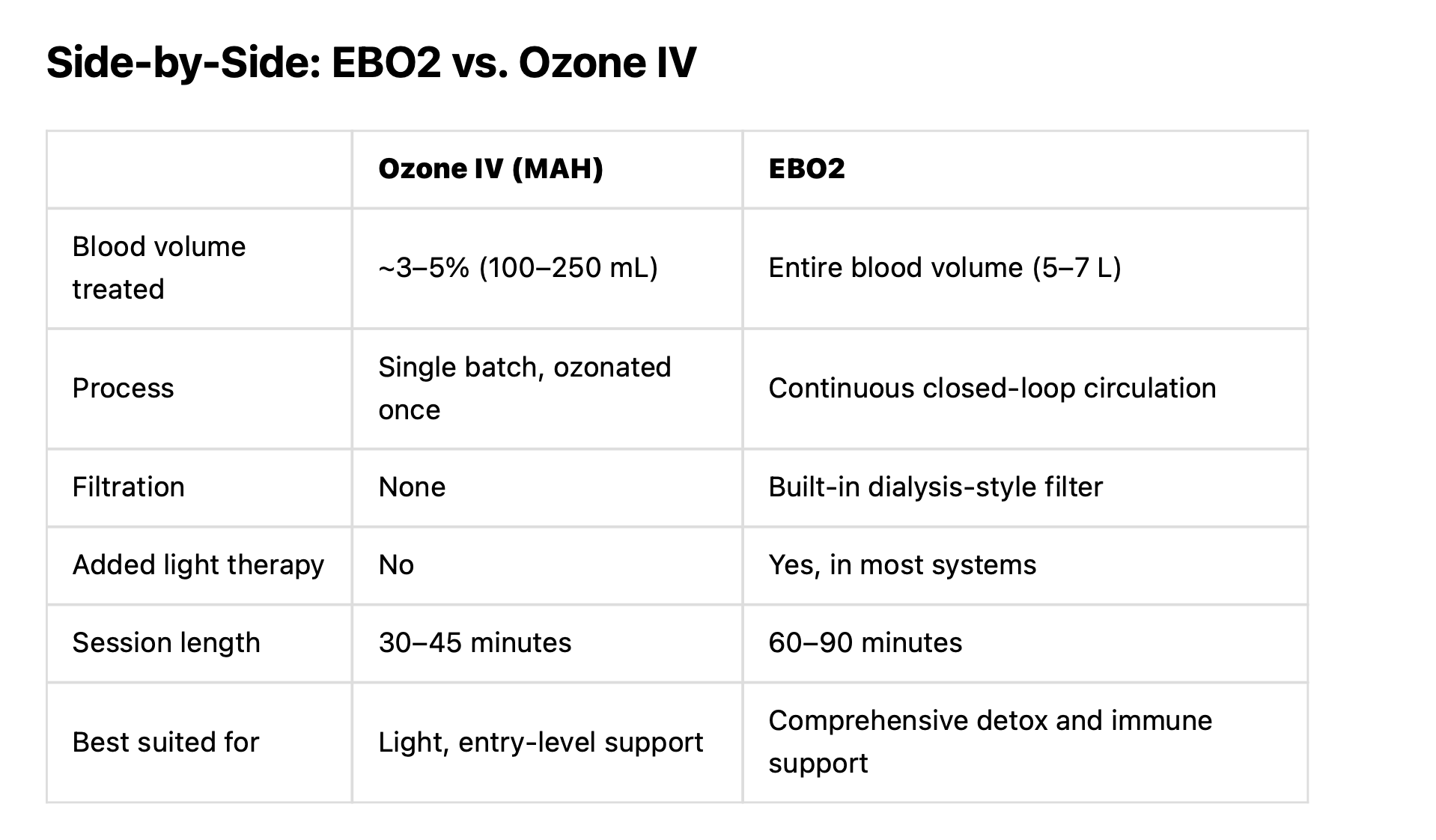
Traditional ozone IV therapy has been around for decades, and it works exactly as its nickname suggests, it’s a one-pass treatment. A small amount of blood, typically somewhere between 100 and 250 mL, is drawn from the body, mixed with ozone gas in a bag, and reinfused back into circulation.
That’s the entire process. No filtration. No continuous circulation. Just a single batch of blood, ozonated once, and returned.
Depending on how it’s dosed, this treats roughly 3–5% of your total blood volume in a session. It’s an effective entry point into ozone therapy, and for decades it’s been the only option available. But it was never designed to do what modern extracorporeal systems can now do.
The Upgrade: What Makes EBO2 Different
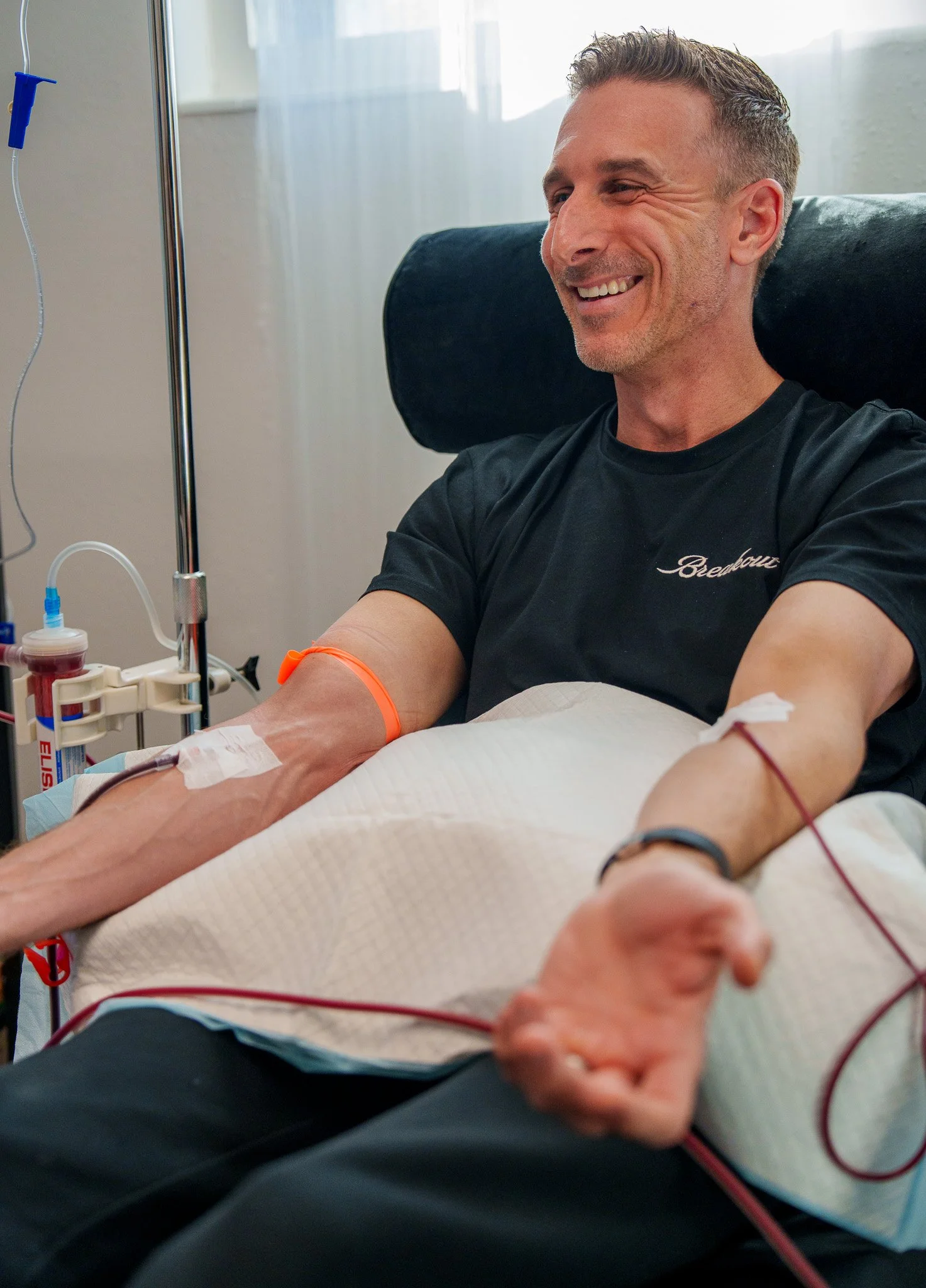
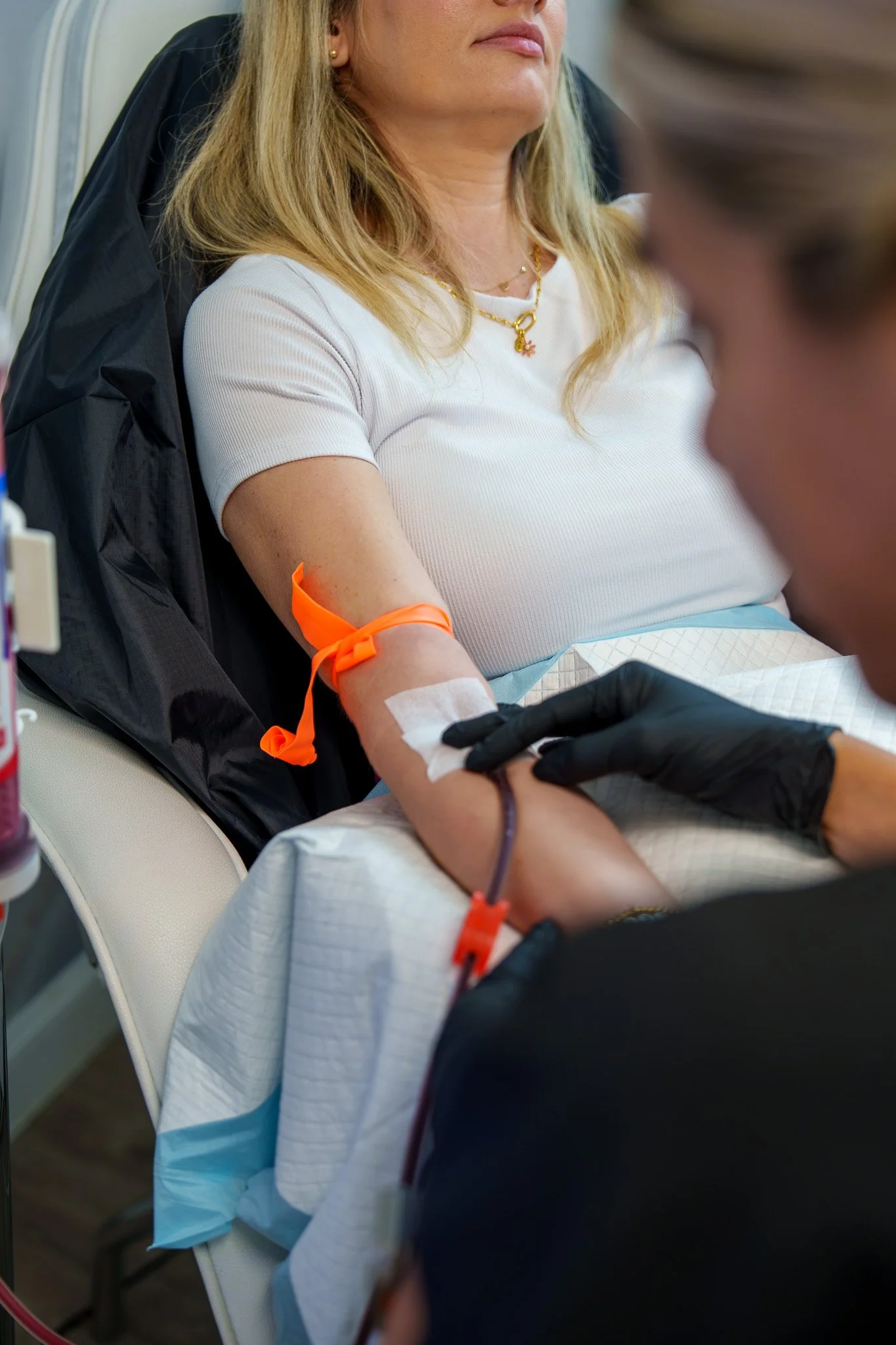
EBO2 doesn’t treat a sample it treats you. During a session, blood is drawn from one arm, cycled through a closed-loop machine that oxygenates and ozonates it in real time, and continuously returned through the other arm. Instead of one static batch, your entire blood volume - typically 5 to 7 liters — passes through the system.
Three features set EBO2 apart from a standard ozone IV:
Volume of blood treated. Where regular Ozone IV works with a few hundred milliliters, EBO2 is built to process your entire blood volume in a single sitting. That’s the difference between spot treating and whole-system treatment.
Built-in filtration EBO2 integrates a dialysis-style filter directly into the circuit. As your blood is ozonated, it’s simultaneously filtered — removing inflammatory proteins, cellular debris, and other waste your body is trying to clear. Standard ozone IV has no filtration step at all; whatever is in the blood when it’s drawn is exactly what goes back in, just ozonated.
Light-based therapy layered in Many EBO2 systems add photobiomodulation (therapeutic light exposure) to the blood as it circulates — an additional layer of support that a standard ozone IV simply isn’t equipped to deliver
Why This Matters
Ozone therapy works by triggering a controlled oxidative response a signal that activates your body’s own antioxidant and immune defenses. The strength of that signal depends heavily on how much blood is actually exposed to ozone, and for how long.
A treatment that reaches 3–5% of your blood volume is going to produce a fundamentally smaller physiological response than one that reaches nearly all of it. Add in the fact that
EBO2 is simultaneously filtering out the very waste products your body is trying to clear, and you’re not looking at “more of the same treatment” — you’re looking at a different category of therapy entirely. That’s really the core distinction: standard ozone IV is a diluted, partial-volume version of what EBO2 was engineered to do at full scale.
Who EBO2 Is For?
EBO2 tends to be the better fit for patients who are:
Looking for a more comprehensive approach to detoxification, not just a light touch-up. Managing chronic inflammation, fatigue, or immune dysregulation. Already familiar with ozone therapy and ready to level up their protocol. Wanting fewer, more impactful sessions rather than frequent, smaller ones
Standard ozone IV still has a place, it’s gentler, shorter, and can be a reasonable starting point for someone brand-new to ozone therapy. But for patients who want their treatment to match the ambition of their health goals, EBO2 is the more serious tool.
The Bottom Line
Both treatments use ozone. Only one treats your whole bloodstream.
If you’ve been considering ozone therapy and you’re weighing your options, it’s worth asking your provider directly: how much of my blood volume does this treatment actually reach, and is there any filtration involved? For a standard ozone IV, the honest answer is “a small fraction” and “no.” For EBO2, it’s “nearly all of it” and “yes.”
Interested in learning whether EBO2 is right for you?
This content is for educational purposes and does not constitute medical advice. Individual results vary; consult with a qualified healthcare provider before beginning any new treatment.